Travel
Budget Travel Tips: See the World for Less
By Ecosys World Editorial Team · Published on 2026-09-05
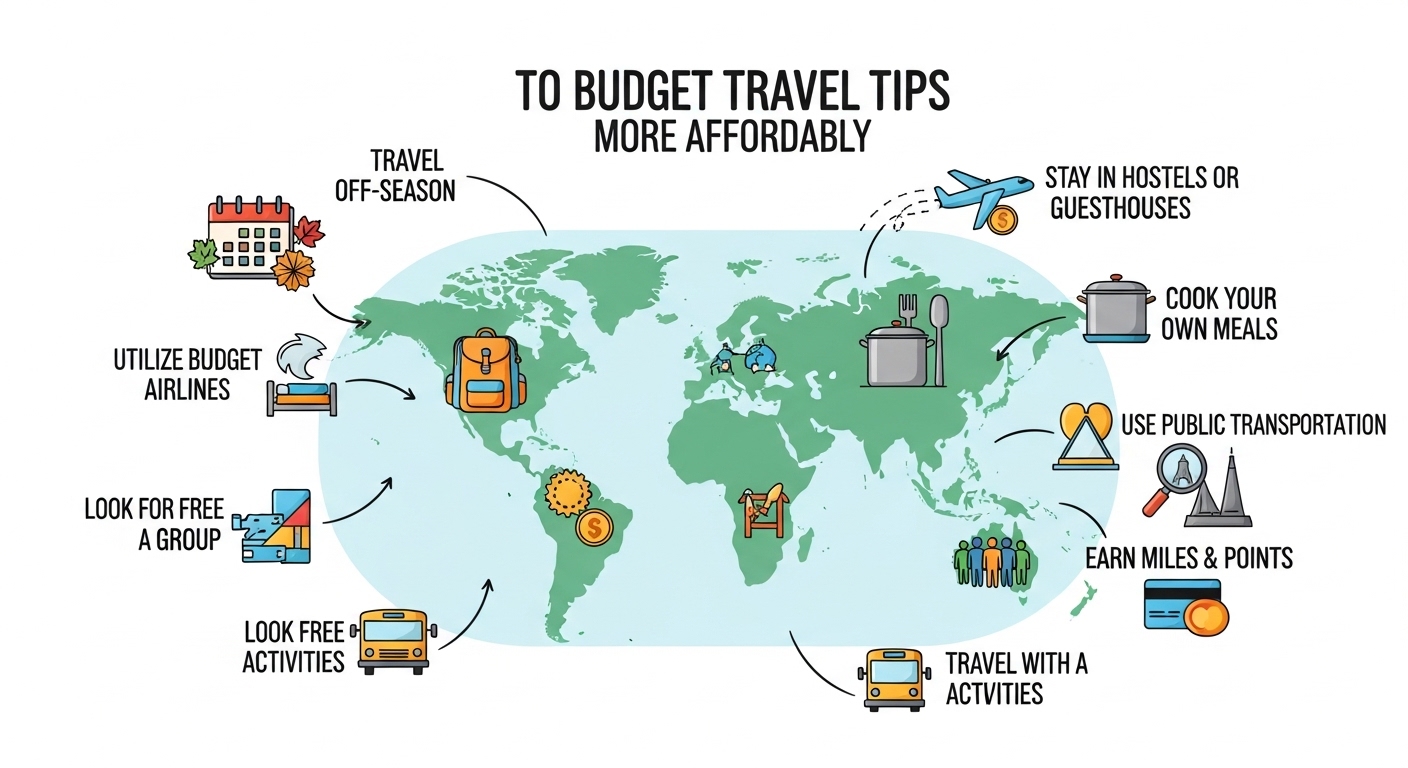
Money-saving strategies for affordable international travel.
Flights: Where the Real Savings Are
Flights typically represent the largest single expense for international travel, and also the most variable — the same seat can cost 3–4 times as much depending on when you book. Use Google Flights' price calendar view to identify the cheapest travel dates in a range. Book 6–8 weeks ahead for short-haul flights and 3–6 months ahead for long-haul. Tuesday and Wednesday departures are typically cheapest. Budget airlines offer dramatically lower fares but scrutinise baggage allowances and ancillary fees carefully — a 'cheap' fare can end up more expensive than a full-service airline once fees are added.
Accommodation Alternatives
Hotels are rarely the best-value accommodation option. Hostel dormitories cost a fraction of hotel rooms and, in quality establishments, offer genuinely comfortable accommodation. Private rooms in hostels bridge the gap between dormitory and hotel pricing. Platforms like Hostelworld, Booking.com, and Airbnb offer comprehensive reviews. For extended stays, furnished apartment rentals on platforms like Spotahome or local estate agent sites are significantly cheaper than hotels and include kitchen facilities that dramatically reduce food costs.
Eating Well on a Budget
Food costs can be managed without sacrificing the culinary experience that is central to travel. Markets, street food, and local canteens frequented by residents rather than tourists consistently offer better value and more authentic food than restaurant-row establishments near major sights. Cooking occasional meals in accommodation with kitchen facilities saves money for splurging on one or two genuinely memorable restaurant experiences. Grocery shopping for breakfast and lunch items and eating one restaurant meal per day is a commonly used strategy that balances budget and experience.
Free and Low-Cost Activities
Many of the world's most rewarding travel experiences cost nothing. Walking tours of city neighbourhoods, free museum days, public parks and markets, beaches, hiking trails, and attending public events are often more memorable than expensive ticketed attractions. Many major museums in cities like London, Amsterdam, and Washington DC are free to enter. Religious sites — churches, temples, mosques — are typically free and architecturally extraordinary. Research free entry days for paid attractions before you travel.
Travel Insurance: Don't Skip It
Budget travel is often where travel insurance matters most — you're more likely to stay in areas with fewer medical facilities and take more adventurous activities. Medical evacuation alone can cost $50,000–$100,000 without insurance. Annual travel insurance policies can cover multiple trips for $100–200 per year — often less than the cost of a single trip's excess on a credit card travel benefit. Compare policies on price comparison sites and ensure adequate medical and cancellation cover for your specific destination and activities.