Finance
Financial Literacy Basics for Young Adults
By Ecosys World Editorial Team · Published on 2026-09-15
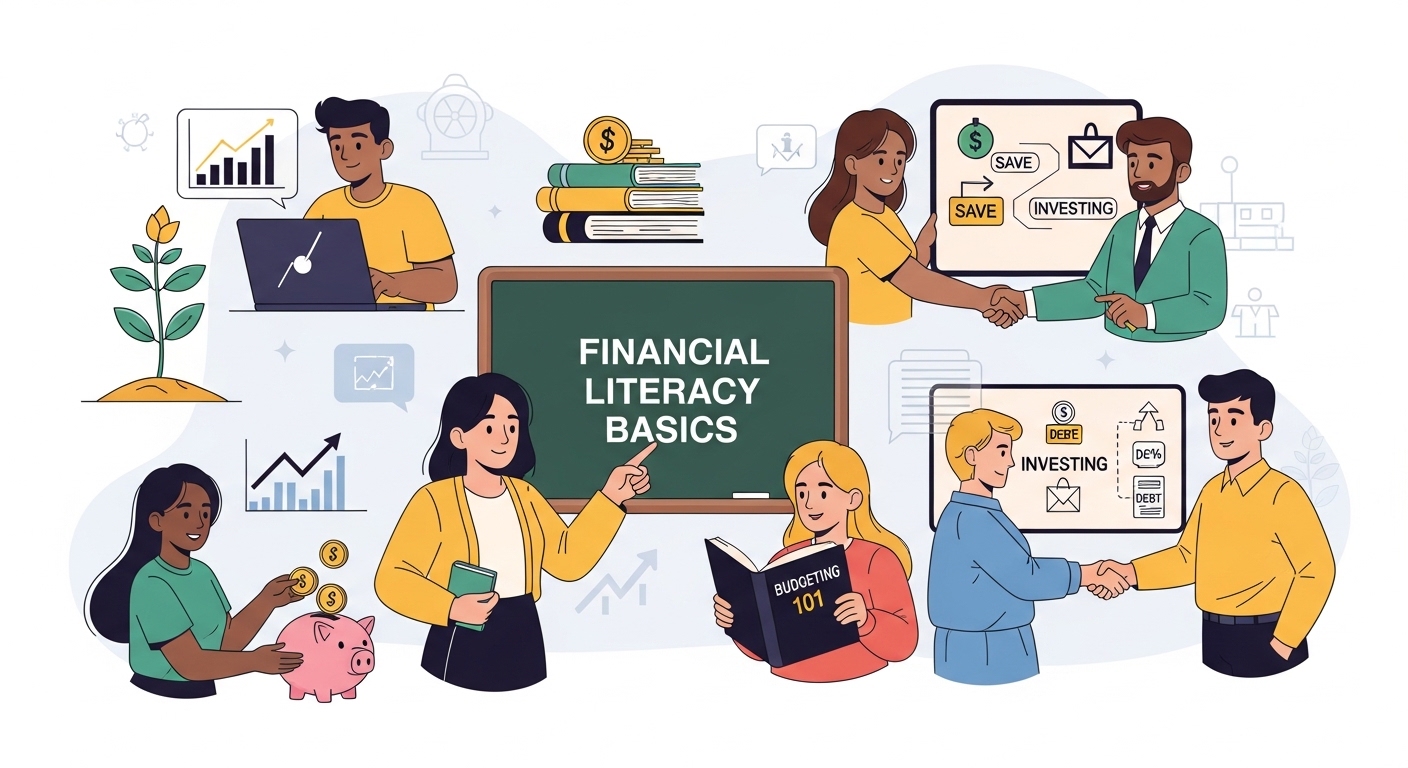
Essential money management skills everyone should learn early.
Why Financial Literacy Matters
Financial illiteracy is extraordinarily costly. People who don't understand compound interest pay significantly more on credit cards and loans. Those who don't understand investment basics leave enormous sums in low-interest savings accounts, missing decades of compound growth. Research by the OECD consistently shows that financial literacy is strongly correlated with financial wellbeing — knowing basic concepts translates directly into better financial decisions and outcomes across income levels.
Budgeting: The Foundation
A budget is simply a plan for how you'll allocate your income. The 50/30/20 rule provides a starting framework: 50% of after-tax income to needs (rent, food, utilities, transport), 30% to wants (dining out, entertainment, holidays), 20% to savings and debt repayment. This isn't a rigid prescription — someone with high rent or significant debt may need to adjust ratios. The key insight is that spending should be intentional rather than the residual after everything else.
Understanding Debt
Not all debt is equal. 'Good debt' finances assets that appreciate or generate income — a mortgage on a property that appreciates, student loans that fund a career with significantly higher earning potential. 'Bad debt' finances depreciating assets or consumption — credit card balances at 20%+ interest, payday loans, car finance for an expensive vehicle. The single most impactful financial move for many people is eliminating high-interest consumer debt, which provides a guaranteed after-tax return equal to the debt's interest rate.
The Basics of Investing
The core principles of personal investing are straightforward: start early (time is your most valuable asset due to compound growth), invest regularly (through employer pension or regular transfers to an investment account), diversify (global index funds provide exposure to thousands of companies, eliminating single-company risk), minimise fees (each percent in annual fees compounds into a significant loss over decades), and stay the course (market downturns are temporary for diversified long-term investors — selling in a panic locks in losses).
Emergency Funds and Insurance
Before investing, financial planners universally recommend building an emergency fund of 3–6 months of living expenses in an accessible account. This prevents being forced to sell investments at a loss or take on debt during job loss, medical emergencies, or unexpected repairs. Adequate insurance — health, income protection, and appropriate home/contents insurance — provides protection against the catastrophic financial events that can wipe out years of careful saving. These protective foundations should precede aggressive investment.