
Population
Global Population Trends in 2026
By Ecosys World Editorial Team · Published on 2026-01-15
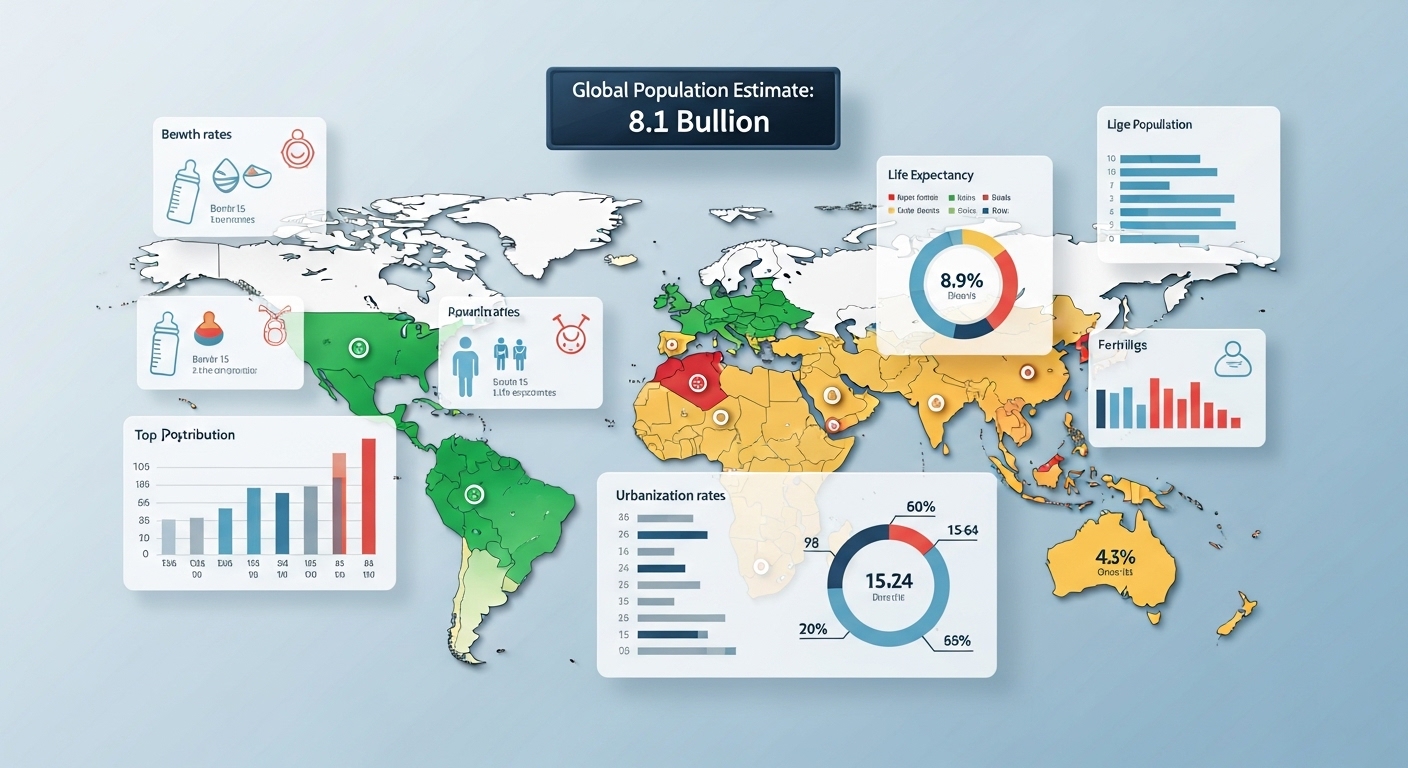
Explore the latest data on world population growth, urbanization, and demographic shifts shaping our future.
Where We Stand Today
The world population crossed 8 billion in November 2022 and continues to grow, though at a slower pace than previous decades. The global growth rate has dropped from 2.1% per year in the 1960s to under 1% today. While overall numbers keep rising, the story behind the data reveals stark regional contrasts — some nations are growing rapidly while others are already shrinking.
The Urbanization Surge
More than 57% of the world's population now lives in urban areas, and this figure is expected to reach 68% by 2050. Megacities with populations over 10 million are multiplying across Asia and Africa. Tokyo remains the world's largest city with over 37 million residents, but Lagos, Kinshasa, and Dhaka are growing at extraordinary rates and will reshape global urban demographics within a generation.
Aging Populations in Developed Nations
Europe, Japan, and South Korea face a demographic crisis: more people are dying than being born. Japan's population has been declining since 2011. Germany, Italy, and Spain are expected to lose millions of residents by 2050 unless offset by immigration. The economic consequences are significant — shrinking workforces mean fewer taxpayers supporting growing elderly populations, straining pension systems and healthcare budgets.
High-Growth Regions
Sub-Saharan Africa is the fastest-growing region on earth. Nigeria is projected to overtake the United States in population by 2050 and could surpass China by the end of the century. Niger has a fertility rate of nearly 7 children per woman — the highest in the world. This growth presents both an opportunity (a youthful workforce) and a challenge (demands on education, healthcare, and employment infrastructure).
What This Means for the Future
Population trends shape everything from climate policy to housing markets. Countries with aging populations must rethink immigration and automation strategies. High-growth nations must invest urgently in education and infrastructure. Understanding these trends isn't just academic — it has direct implications for business, policy, and everyday life across every continent.