Population
Top 10 Most Populous Countries in the World
By Ecosys World Editorial Team · Published on 2026-01-20
A comprehensive ranking of countries by population with analysis of growth rates and projections.
India Overtakes China
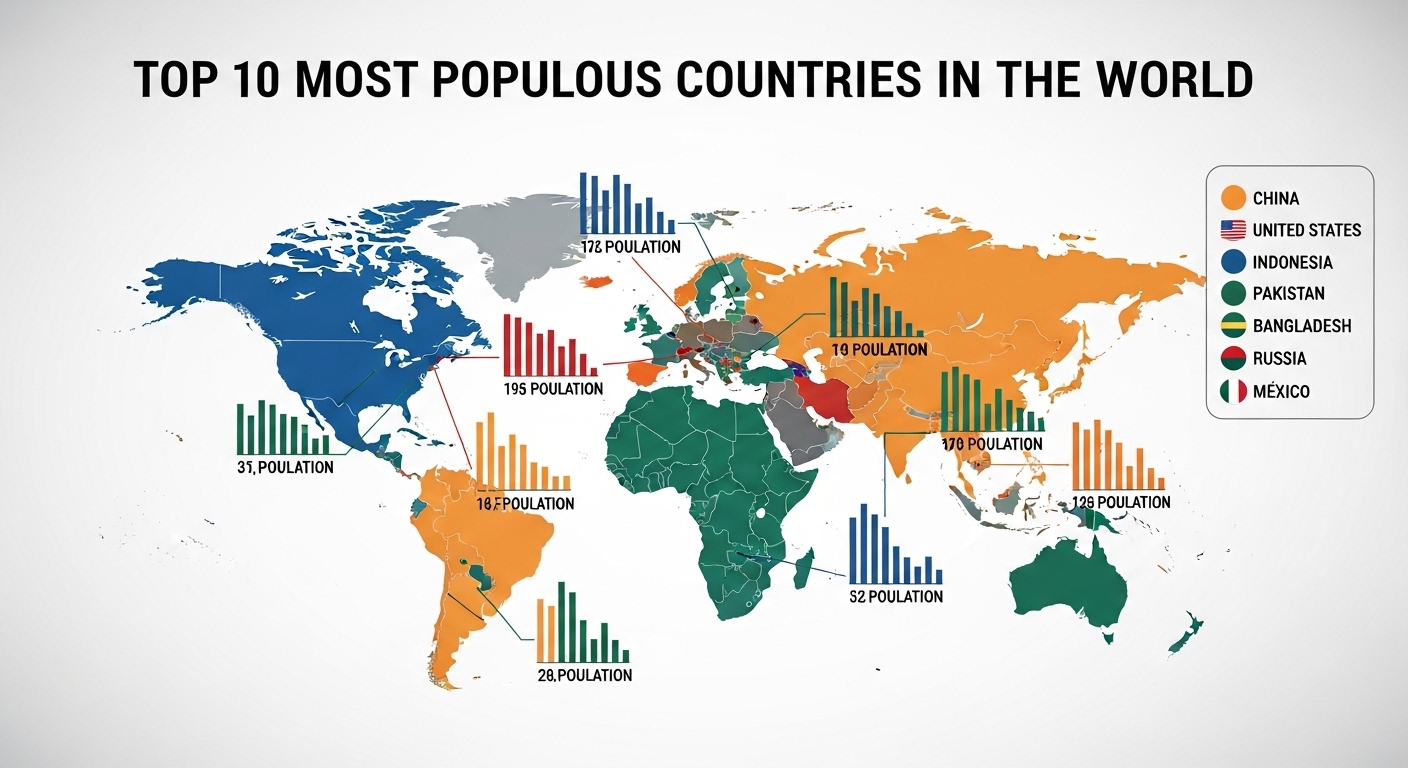
In 2023, India officially became the world's most populous country, surpassing China for the first time in recorded history. India's population of approximately 1.43 billion is still growing at around 0.8% per year, while China's population is now declining. This demographic shift has major geopolitical and economic implications — India now has the world's largest workforce, and its median age of 28 is significantly younger than China's 39.
The Top 10 at a Glance
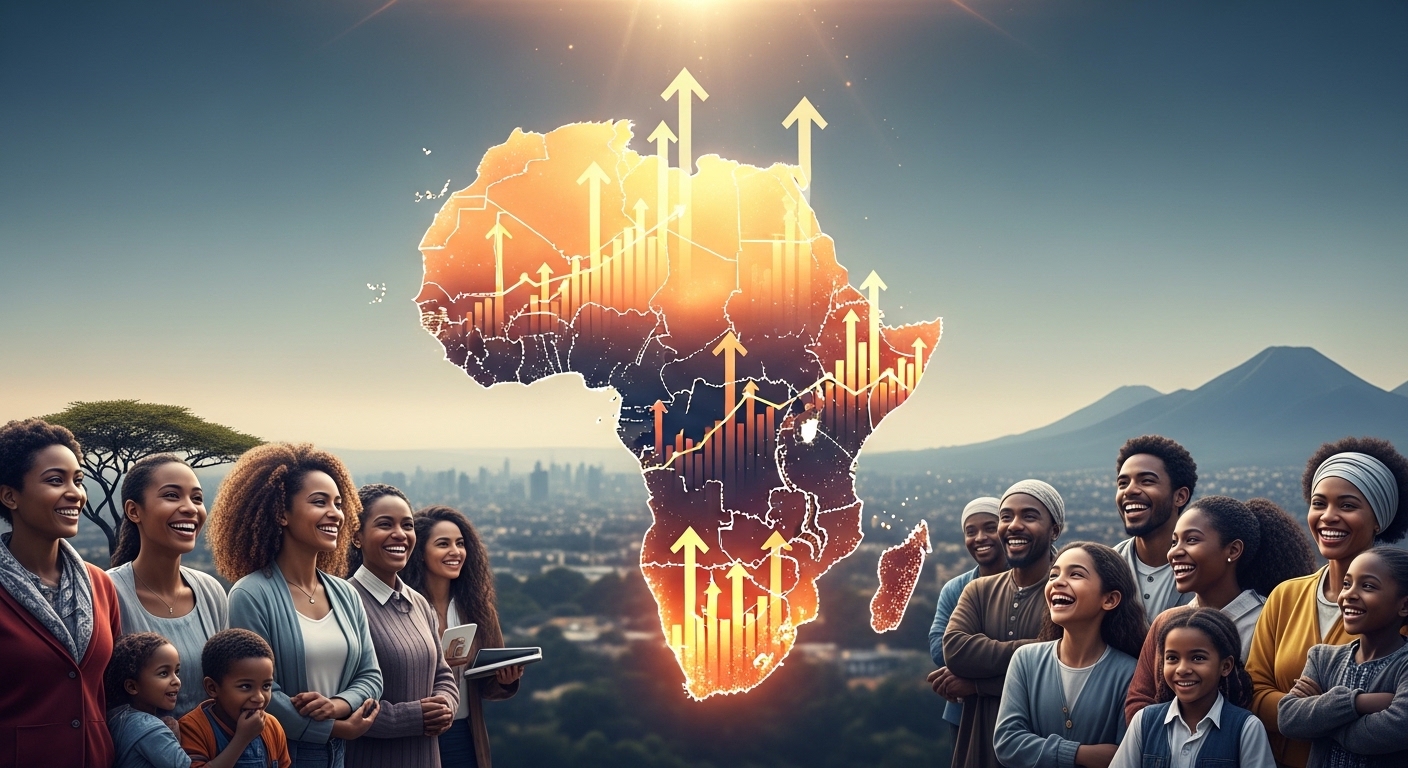
After India and China, the United States ranks third with around 340 million people — far behind the top two. Indonesia (277M), Pakistan (240M), Nigeria (224M), Brazil (216M), Bangladesh (173M), Russia (144M), and Ethiopia (126M) round out the top 10. Notably, Ethiopia recently replaced Mexico in the rankings due to rapid growth, reflecting Africa's increasing demographic weight on the world stage.
Growth Rates Tell the Real Story
Raw population numbers don't reveal the full picture. Nigeria grows by over 2.4% per year and could become the world's third most populous nation by 2050. Meanwhile, Russia and Japan are shrinking. The United States continues slow but steady growth, largely driven by immigration. Bangladesh, despite being in the top 10, has dramatically reduced its fertility rate over the past 30 years — a public health success story.
Density vs. Numbers
Population density matters as much as total population. Bangladesh has 1,165 people per square kilometre — among the highest in the world — while Russia has just 8. This affects resource pressure, infrastructure needs, and quality of life in ways that raw population counts don't capture. Comparing Singapore (nearly 8,000/km²) to Australia (3/km²) illustrates how geography and governance shape population distribution.
Projections to 2100
By 2100, the United Nations projects global population could reach anywhere from 9 to 12 billion depending on fertility trends. Africa is expected to nearly quadruple its current population. Europe and East Asia will likely shrink. These long-term projections underscore the importance of today's policy decisions around education, family planning, and sustainable development.