Holidays
Vibrant Festivals of South America
By Ecosys World Editorial Team · Published on 2026-08-20
From Rio Carnival to Inti Raymi, discover South America's festive spirit.
Rio Carnival: The World's Biggest Party
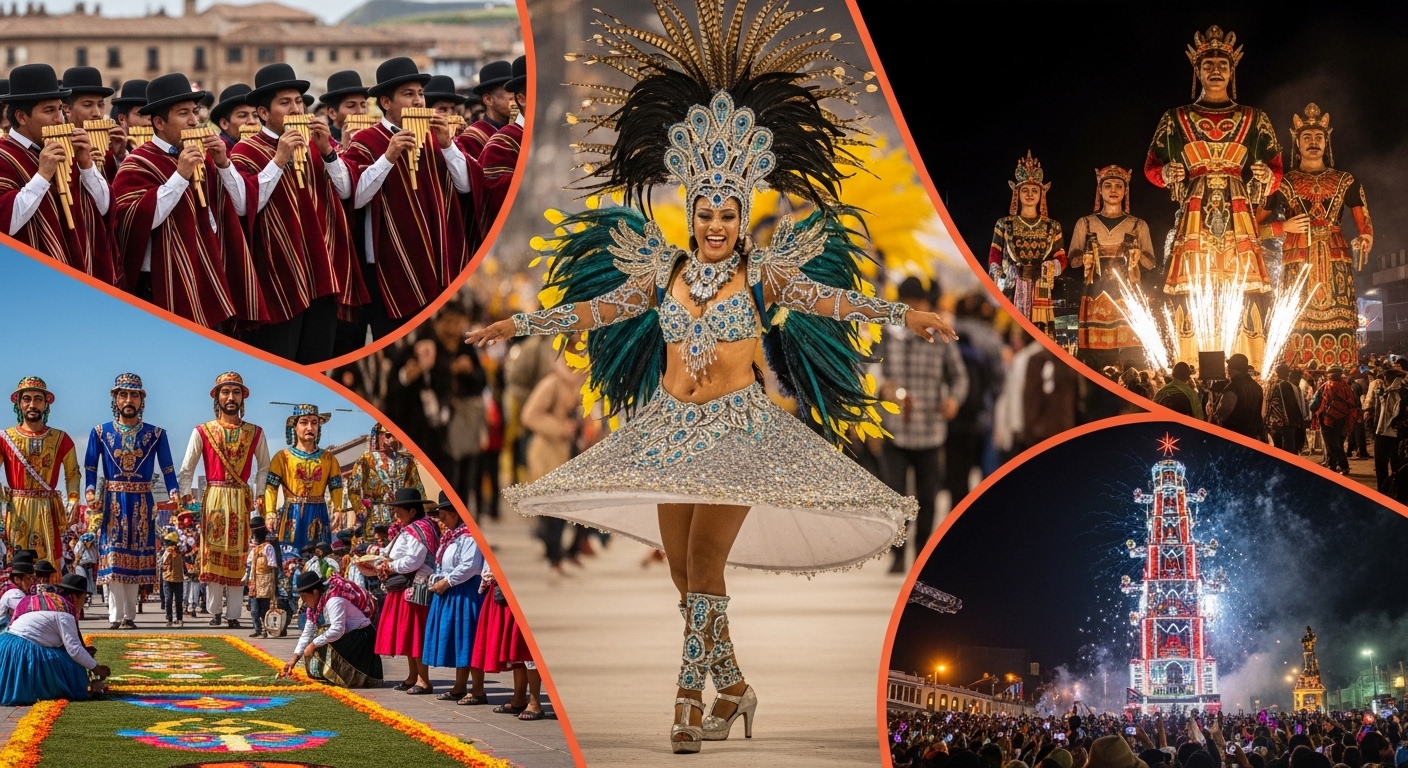
Rio de Janeiro's Carnival is arguably the world's most famous festival — five days of samba, sequins, and spectacle each February or March before the start of Lent. The Sambadrome parade, where samba schools of up to 5,000 performers compete with elaborate floats, is the centrepiece, but the real Carnival also happens in the street blocos (street parties) attended by millions. Brazil's Carnival is simultaneously a religious cultural event — the last feast before Lenten fasting — and an explosion of democratic celebration that briefly dissolves social hierarchies.
Inti Raymi: Festival of the Sun
Inti Raymi (Festival of the Sun) is the most important festival of the Inca Empire and is still celebrated on June 24 in Cusco, Peru, with a scale and ceremony that attracts visitors from around the world. The festival honours Inti, the sun god, at the winter solstice in the Southern Hemisphere. The main ceremony at the Sacsayhuamán archaeological site above Cusco involves hundreds of performers in Inca dress re-enacting ancient rituals. It's one of South America's most visually dramatic cultural events.
Argentina's Vendimia Wine Festival
The National Grape Harvest Festival (Vendimia) in Mendoza, Argentina, celebrates the grape harvest each March with music, theatre, and the election of a Harvest Queen. Mendoza's position at the foot of the Andes makes it one of the world's premier wine regions, and Vendimia is both a cultural celebration of agricultural heritage and a major tourist draw. The night show in the Frank Romero Day Amphitheatre, with Andean peaks as a backdrop, is one of South America's most spectacular open-air performances.
Bolivia's Oruro Carnival
While Rio's Carnival is more famous globally, Bolivia's Oruro Carnival is UNESCO-recognised as an Intangible Cultural Heritage of Humanity. Held each February, it centres on the diablada — a dance performed by hundreds of elaborately costumed devils and angels re-enacting the struggle between good and evil. The costumes, weighing up to 30 kg, take artisans months to produce. Oruro's carnival has pre-Hispanic roots fused with Catholic traditions brought by Spanish colonisers, making it a unique expression of Andean syncretism.
Colombia's Barranquilla Carnival
Barranquilla's Carnival is Colombia's largest festival and the second-largest carnival in the world after Rio de Janeiro. Also UNESCO-listed, it takes place each February and showcases the cultural diversity of Colombia's Caribbean coast through cumbia, mapalé, and congo dances. The Gran Parada parade brings together over 100 groups in elaborate costumes over four days. Unlike Mardi Gras carnivals focused on excess, Barranquilla's festival is deeply rooted in the Afro-Colombian, Indigenous, and Spanish cultural fusion that defines the Caribbean coast's distinct identity.