Health
Body Fat Percentage vs BMI: What's the Difference?
By Ecosys World Editorial Team · Published on 2026-06-15
Understand the key differences between these two health metrics.
The Fundamental Difference
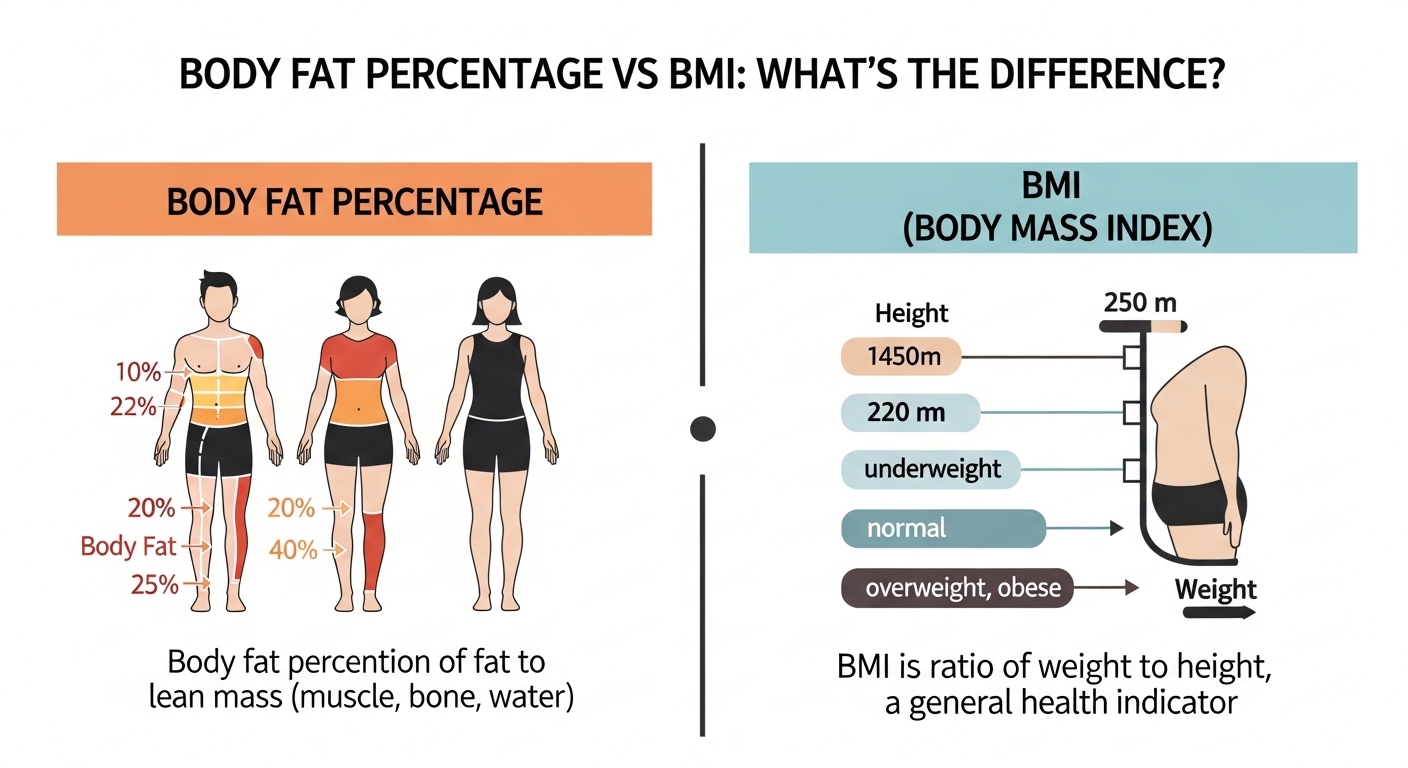
BMI measures your total mass relative to your height. It makes no distinction between fat, muscle, bone, water, or organ weight. Body fat percentage, by contrast, measures specifically what proportion of your total weight is composed of fat tissue. This distinction is crucial for health assessment: two people with identical BMIs can have body fat percentages that differ by 10–15 percentage points, with correspondingly different health risk profiles.
Health Implications of Each Metric
Excess body fat — particularly visceral fat stored around the abdominal organs — is directly associated with insulin resistance, type 2 diabetes, cardiovascular disease, and certain cancers. BMI correlates with these outcomes at the population level, but individual cases can be misleading. A bodybuilder with 8% body fat and 90 kg of muscle may have a BMI of 30 (classified as obese) while being in exceptional health. Meanwhile, a sedentary person with a 'normal' BMI of 23 can have 30% body fat — a condition called 'skinny fat' or normal-weight obesity.
How Body Fat Is Measured
Several methods exist with varying accuracy and accessibility. DEXA (dual-energy X-ray absorptiometry) scans are the gold standard, typically available at health clinics and hospitals. Hydrostatic (underwater) weighing is highly accurate but impractical. Bioelectrical impedance analysis (BIA) — used in consumer smart scales and handheld devices — is convenient but can vary by 3–5% based on hydration levels. The body fat calculator on this site uses the U.S. Navy method, which uses circumference measurements and is accurate to within 3–4% for most people.
Healthy Body Fat Ranges
Healthy body fat ranges vary by sex and age. For adult men, 10–20% is generally considered healthy (athletes may be 6–13%); above 25% is considered obese. For adult women, 20–30% is the healthy range (athletes: 14–20%); above 35% is obese. Women naturally carry more essential fat for hormonal function and reproductive health than men, which is why the thresholds are higher. Athletes may have body fat percentages well below the general population norm without any health risk.
Which Should You Track?
For general health monitoring, BMI is a useful, zero-effort screening metric. But if you're exercising seriously, losing weight, or have been flagged for metabolic risk despite a normal BMI, measuring body fat percentage provides much more actionable information. Tracking body fat alongside weight allows you to see whether you're losing fat or muscle — something BMI tracking alone cannot reveal. Use both metrics together for the most complete picture.