Health
A Beginner's Guide to Calorie Counting
By Ecosys World Editorial Team · Published on 2026-05-15
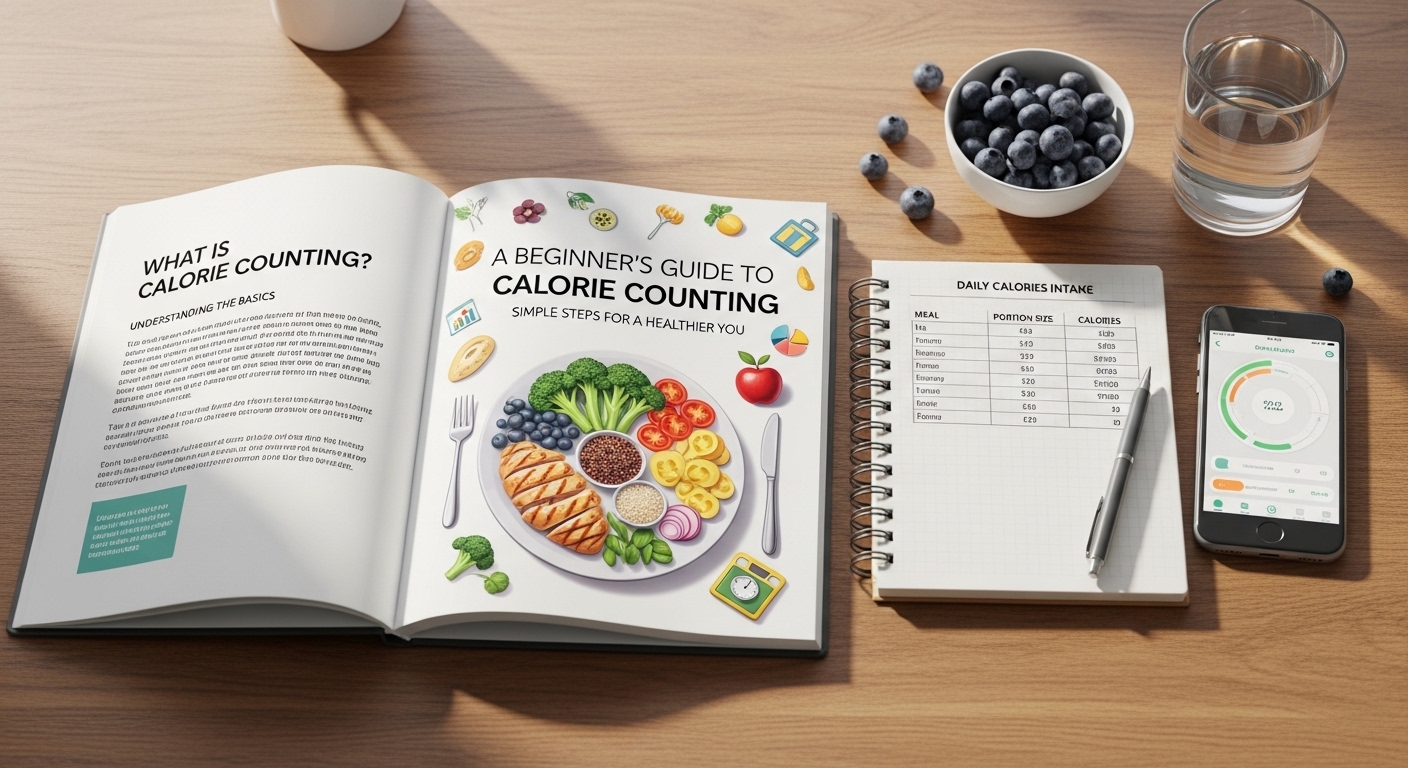
Everything you need to know about tracking calories for weight management.
What Is a Calorie?
A calorie (technically a kilocalorie, or kcal) is a unit of energy — specifically, the amount of energy needed to raise 1 kg of water by 1°C. In nutrition, it measures the energy food provides to your body. Your body uses this energy for everything from breathing and maintaining body temperature to exercise and digestion. When you consume more calories than you use, the surplus is stored as fat; when you consume fewer, your body draws on stored fat for energy.
Understanding Your TDEE
Total Daily Energy Expenditure (TDEE) is the number of calories your body burns in a day, accounting for your basal metabolic rate (BMR — the calories needed just to keep you alive at rest) plus the energy used in physical activity. TDEE is typically calculated using formulas like the Mifflin-St Jeor equation, which factors in height, weight, age, sex, and activity level. Our calorie calculator uses this formula to give you a personalised daily energy target.
Calorie Deficits and Surpluses
To lose approximately 0.5 kg of fat per week, you need a calorie deficit of roughly 3,500 kcal per week — about 500 kcal per day below your TDEE. To gain muscle, a modest surplus of 250–500 kcal per day above TDEE, combined with resistance training, is generally recommended. Very large deficits (more than 1,000 kcal/day) typically result in muscle loss alongside fat loss, slower metabolism, and nutritional deficiencies.
Calorie Density and Food Quality
Not all calories are equal in terms of satiety and nutrition. 500 calories from chicken breast, vegetables, and brown rice fill you up far more than 500 calories from a chocolate bar. High-fibre foods slow digestion and maintain blood sugar levels, reducing hunger. Protein has the highest thermic effect of food — your body burns roughly 25% of protein calories during digestion. Prioritising protein and fibre within your calorie budget makes hitting your targets much easier.
Practical Tracking Tips
Apps like MyFitnessPal or Cronometer make calorie tracking manageable by providing databases of millions of foods. For accuracy, weigh food with a kitchen scale rather than estimating portions — research consistently shows people underestimate portion sizes by 20–50%. Track for 2–4 weeks initially to build awareness of your eating patterns; most people find they can maintain a healthy weight intuitively after this initial data-gathering period without tracking indefinitely.