Tools
IP Addresses Explained: What They Reveal About You
By Ecosys World Editorial Team · Published on 2026-09-10
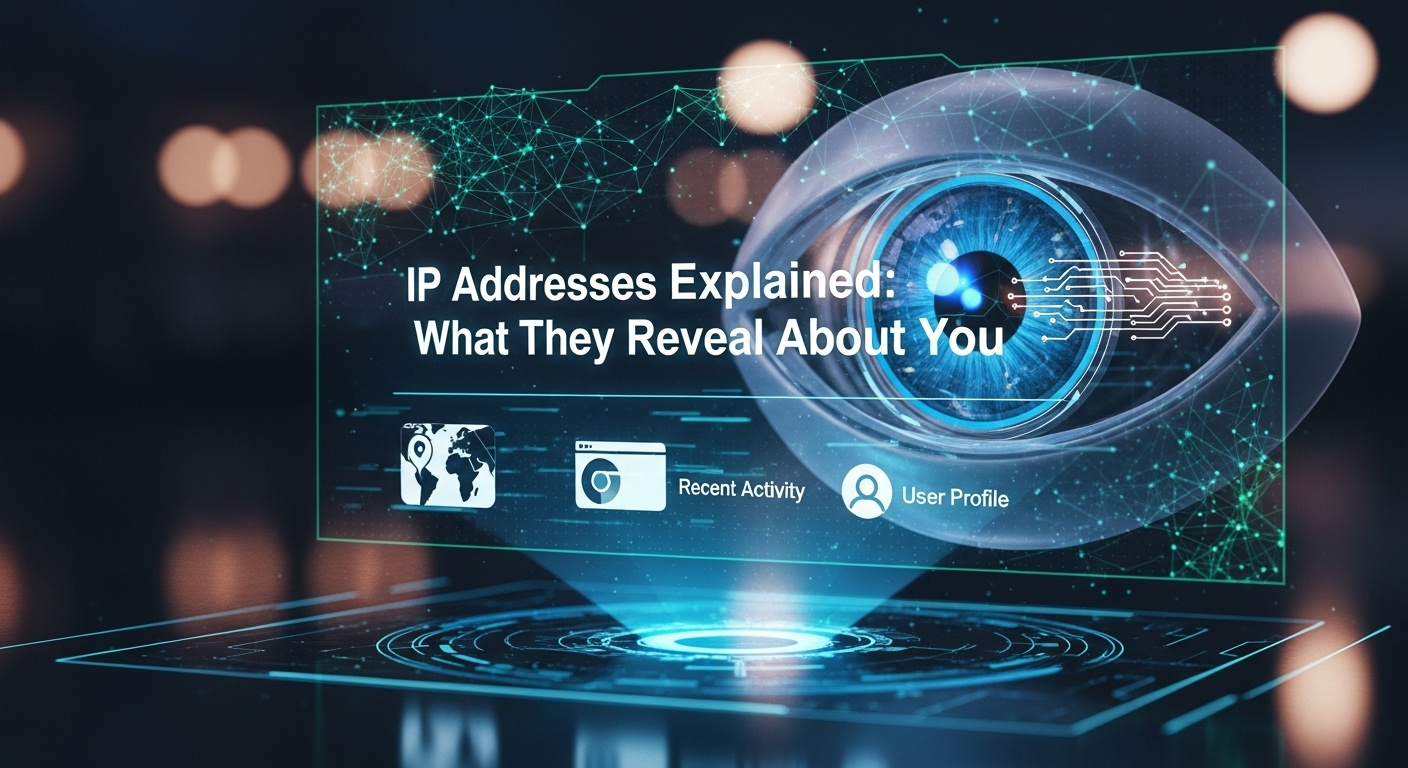
Learn what your IP address says about your location and online identity.
What Is an IP Address?
An IP (Internet Protocol) address is a numerical label assigned to every device connected to a network. It serves two functions: identification (which device is this?) and location addressing (where is this device on the network?). When you visit a website, your request carries your IP address so the server knows where to send the response — like a return address on a letter. Every device on the internet — your phone, laptop, the server hosting this page — has an IP address.
IPv4 vs. IPv6
The original IP address standard, IPv4, uses 32-bit addresses expressed as four numbers separated by dots (e.g., 192.168.1.1). This allows approximately 4.3 billion unique addresses — a number that seemed vast in 1983 but has been nearly exhausted by the explosion of internet-connected devices. IPv6, using 128-bit addresses expressed in hexadecimal (e.g., 2001:0db8:85a3:0000:0000:8a2e:0370:7334), provides 340 undecillion unique addresses — effectively unlimited for any foreseeable future. Adoption of IPv6 is growing but many networks still primarily use IPv4.
What Your IP Address Reveals
Your IP address reveals your approximate geographic location — typically accurate to the city level, occasionally more precise. It also identifies your Internet Service Provider (ISP). Websites, advertisers, and government agencies can use IP addresses to determine rough location, ISP identity, and to correlate activity across sessions. However, IP addresses do not directly reveal your name, home address, or personal identity — that requires additional information typically only accessible to ISPs under legal process.
Dynamic vs. Static IP Addresses
Most home internet connections use dynamic IP addresses — your ISP assigns a different IP address each time you connect, or periodically rotates addresses. This is more efficient use of the available address pool. Static IP addresses, which remain constant, are typically used by servers, businesses, and for remote access applications where a consistent address is needed. Some ISPs offer static IP addresses to residential customers for an additional monthly fee.
Privacy and VPNs
A Virtual Private Network (VPN) routes your internet traffic through a server in a different location, making your traffic appear to originate from that server's IP address rather than your own. This masks your actual IP address from the websites you visit and your ISP from seeing which sites you visit. VPNs are widely used for privacy, accessing geo-restricted content, and securing connections on public WiFi. Use our IP lookup tool to see what information your current IP address reveals about your apparent location.